
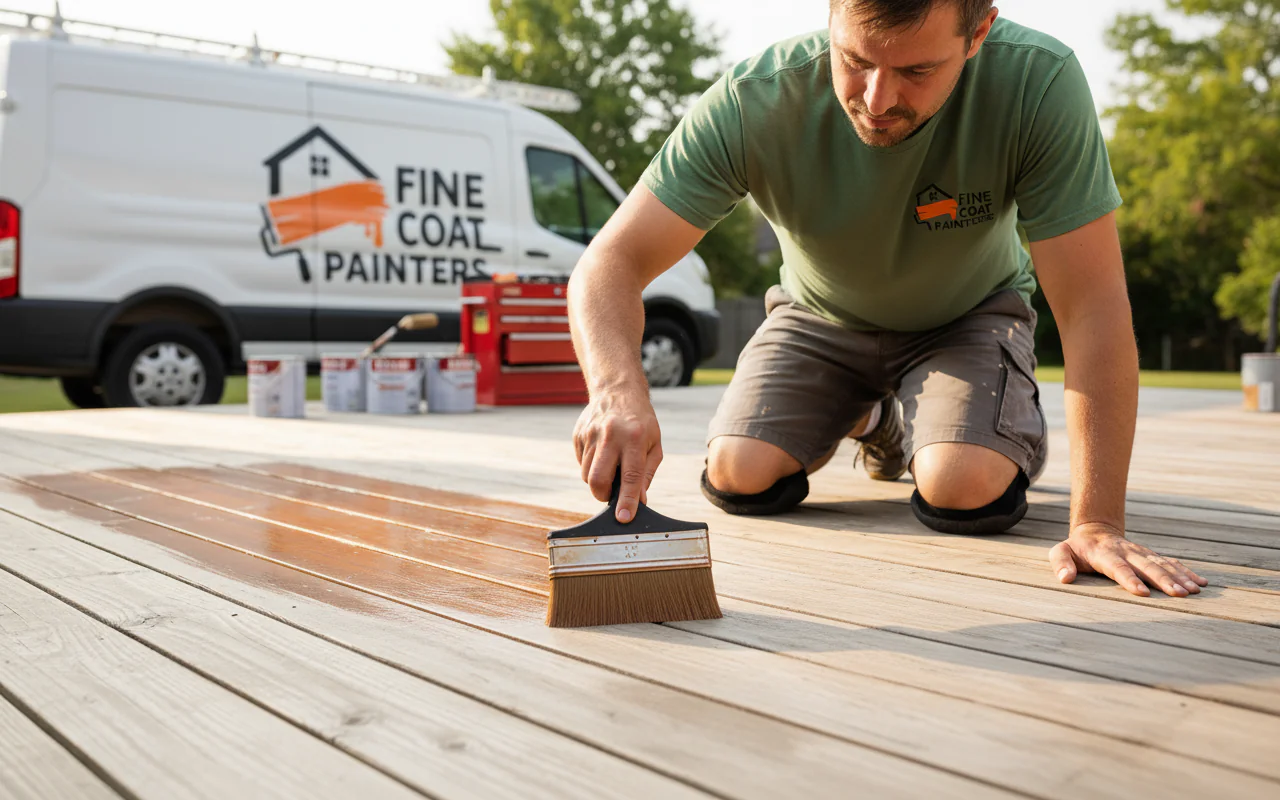
How Weather in Lynn, MA Impacts Your Exterior & Deck Paint—and How to Protect It

Lynn's coastal climate accelerates deck paint damage through salt exposure and humidity. Discover professional protection strategies that actually work.

Share:

Summary:

Massachusetts coastal weather creates unique challenges for deck and exterior paint that most homeowners don’t fully understand. Salt air, high humidity, and temperature swings can cut your paint’s lifespan in half. But the right approach makes all the difference. Professional-grade materials, proper timing, and coastal-specific techniques can protect your investment for years, not months.
Table of contents
Your deck looked perfect when you first painted it. But if you live in Lynn, you’ve probably noticed something frustrating: that fresh paint doesn’t seem to last nearly as long as it should. You’re not imagining it, and you’re definitely not alone. Lynn’s coastal location creates a perfect storm of conditions that can destroy even quality paint in just a few years. Salt air, humidity swings, and temperature changes work together to break down protective coatings faster than you’d expect. The good news? Understanding what you’re up against is the first step toward real protection.

Why Lynn's Coastal Climate Is So Hard on Paint

Living near the coast comes with incredible views and ocean breezes. It also comes with invisible enemies that attack your paint every single day.

Salt particles from ocean spray travel surprisingly far inland, settling on your deck and exterior surfaces. When humidity kicks in—which happens frequently in Lynn—that salt pulls moisture directly into tiny openings in your paint. This creates a cycle where salt accumulates, water penetrates, and UV rays break down the protective coating from multiple angles.

The result? Paint that should protect your deck for 7-10 years starts failing in just 3-5 years. You’ll see it first as small bubbles or slight discoloration, but it quickly progresses to peeling, cracking, and that chalky residue that tells you the binders in your paint are breaking down.
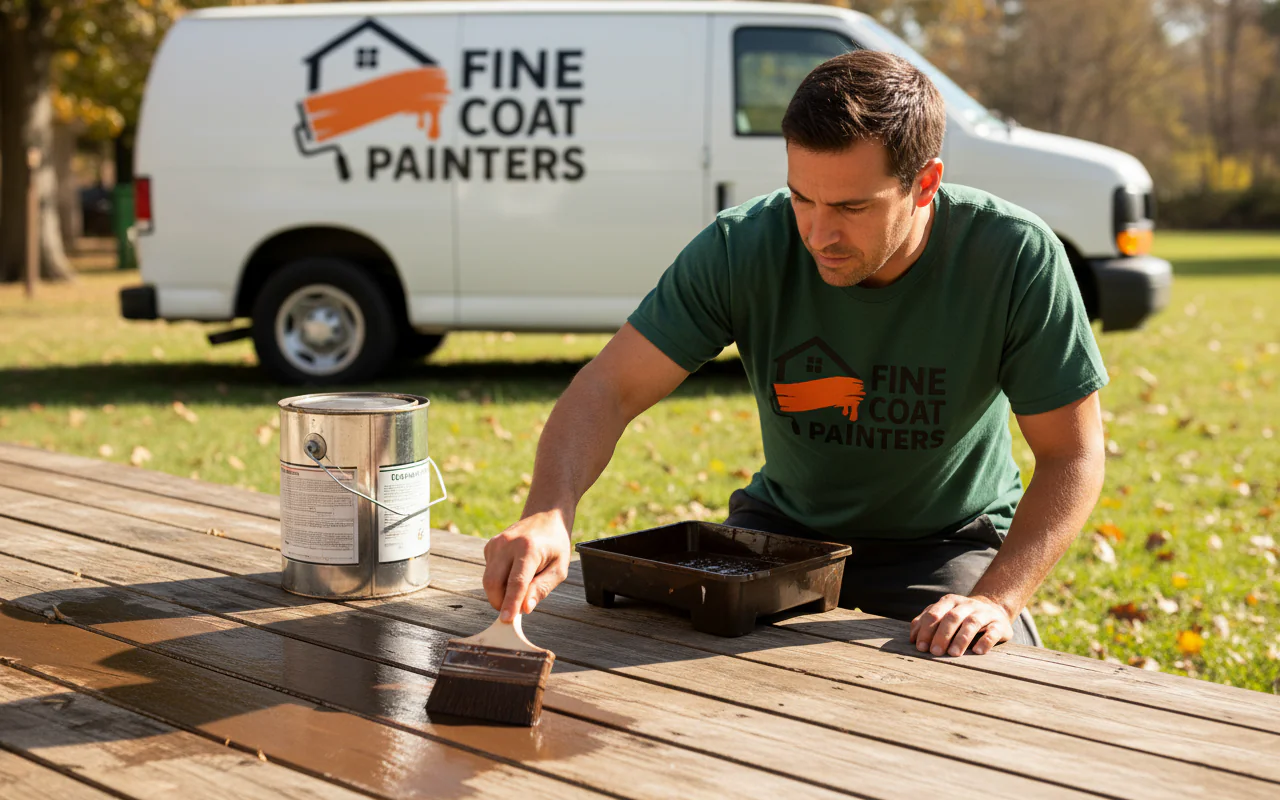
How Salt Air Specifically Damages Deck Paint

Salt doesn’t just sit on your deck’s surface—it actively works to destroy your paint from the inside out. When salt crystals build up beneath the paint film, they cause the coating to lift and crack. This isn’t just cosmetic damage; it’s structural failure of your paint system.

The process accelerates during Lynn’s humid summers. High moisture levels keep surfaces damp for extended periods, and salt retains that moisture like a sponge. This combination acts like slow-acting acid, breaking down paint layers systematically.

What makes this particularly frustrating is that the damage often starts where you can’t see it. Salt works its way under the paint film first, disrupting the bond between the coating and your deck. By the time you notice bubbling or peeling on the surface, the underlying damage is already extensive.

Temperature fluctuations make everything worse. As materials expand and contract with changing weather, already-weakened paint develops stress cracks that let even more moisture and salt penetrate. It’s a cascading failure that explains why coastal properties need completely different approaches than inland homes.

The Hidden Impact of Humidity on Your Deck

Humidity in Lynn doesn’t just make summer days feel sticky—it creates serious problems for your deck’s protective coating. When moisture gets trapped beneath the paint film, it disrupts the crucial bond between the paint and the wood surface.

High humidity slows the drying process when paint is first applied, which can lead to poor adhesion from day one. But even after your paint has cured, ongoing humidity creates an environment where mold and mildew thrive, especially on shaded surfaces and areas with poor air circulation.

The real problem happens during those humid nights when temperatures drop. Moisture condenses on your deck’s surface and seeps into any microscopic openings in the paint. Over time, this trapped moisture causes the paint to bubble and peel as it tries to escape.

Lynn’s location means you get hit with humidity from multiple sources: ocean moisture, morning fog, and the natural humidity that comes with New England’s climate patterns. This constant exposure means your deck never gets a break from moisture-related stress.

We understand that humidity management starts with proper surface preparation and the right primer system. Without these foundations, even the best topcoat won’t stand up to Lynn’s challenging environment.

Want live answers?

Connect with a Fine Coat Painters expert for fast, friendly support.

Winter Weather and Temperature Swings

Lynn’s winters bring their own set of challenges that many homeowners don’t consider when thinking about paint protection. Freeze-thaw cycles put enormous stress on painted surfaces, causing expansion and contraction that can crack even well-applied coatings.

Snow and ice create additional moisture exposure, and when spring arrives, that moisture has to go somewhere. If your paint system isn’t designed to breathe properly, trapped moisture will cause blistering and peeling as temperatures warm up.

The temperature swings during shoulder seasons—late fall and early spring—are particularly hard on decks. One day it’s 60 degrees, the next it’s 30. These rapid changes cause materials to expand and contract quickly, creating stress points in your paint that can lead to premature failure.
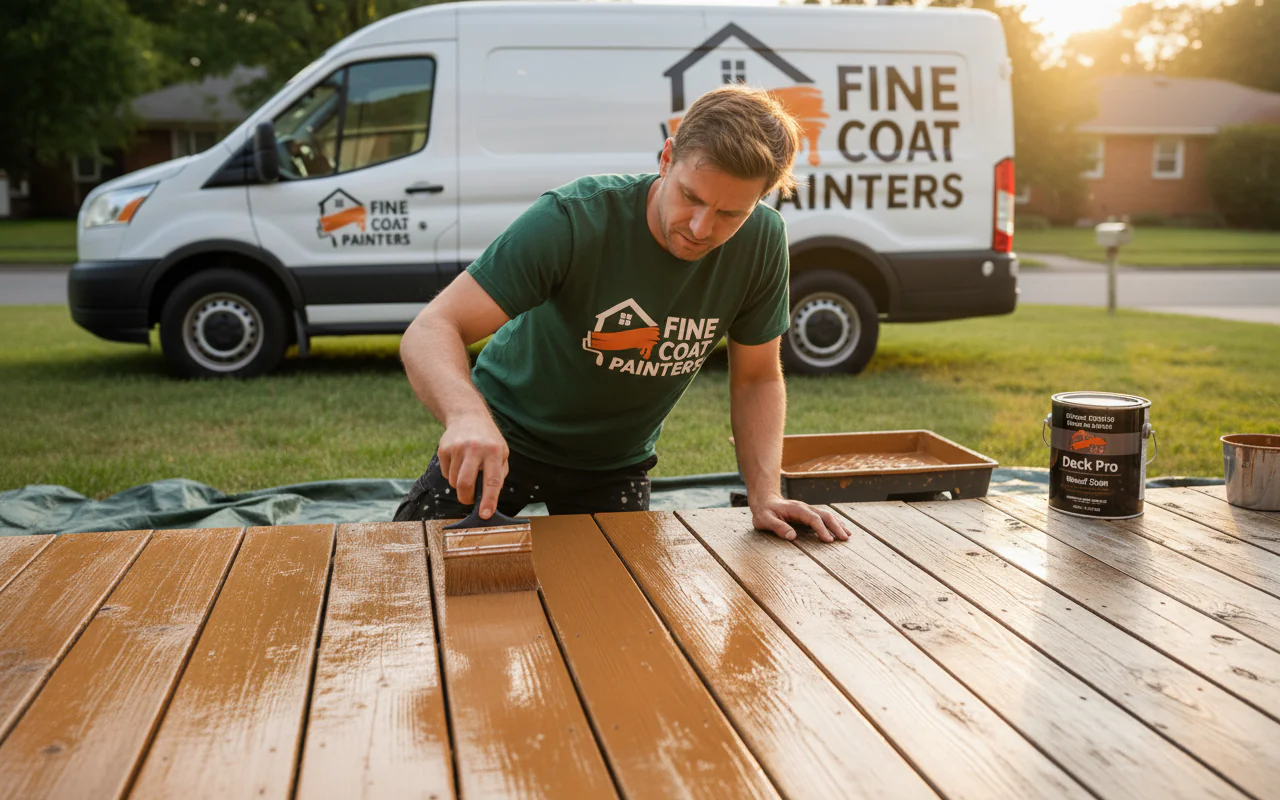
Cold Weather Staining Challenges

Many homeowners try to squeeze in deck staining projects during cooler months, but Lynn’s climate makes this tricky. Most stains require temperatures between 50°F and 90°F for proper application and curing.

When it’s too cold, stain takes significantly longer to dry and may not penetrate wood effectively. If temperatures drop below freezing before the stain has fully cured, you can end up with poor adhesion, uneven color, or complete coating failure.

The shorter days of fall and winter also limit your working window. You need consistent temperatures for at least 24-48 hours after application, which can be hard to predict during New England’s variable weather patterns.

Oil-based stains generally perform better in cooler conditions than water-based products, but even they have limits. Professional timing becomes crucial—waiting for the right weather window can mean the difference between a stain job that lasts years versus one that fails by spring.

If you’re planning a deck project, late spring through early fall typically offers the most reliable conditions. But when winter damage requires immediate attention, working with professionals who understand cold-weather techniques can make emergency repairs possible.

Protecting Your Investment Year-Round

The key to long-lasting deck protection in Lynn isn’t just choosing better paint—it’s understanding that coastal conditions require a complete system approach. This starts with thorough surface preparation that removes salt buildup and addresses any existing moisture damage.

Marine-grade primers designed for coastal environments create the foundation your topcoat needs to perform. These specialized products resist salt penetration and provide superior adhesion even in challenging conditions. Skipping this step to save money almost always leads to premature failure.

Regular maintenance makes a huge difference in how long your paint lasts. Washing your deck with fresh water removes salt accumulation before it can cause damage. This simple step, done a few times per year, can significantly extend your paint’s lifespan.

The right paint selection matters enormously. Acrylic latex paints with mold-resistant and salt-blocking additives offer the best performance in coastal environments. These formulations allow moisture to escape while providing excellent water resistance—exactly what Lynn’s climate demands.

Professional application ensures proper film thickness and even coverage. Coastal conditions are unforgiving, and small mistakes in application can lead to big problems down the road. The investment in professional service typically pays for itself in longer-lasting results and fewer maintenance headaches.

Getting Professional Results That Last

Understanding Lynn’s challenging climate is the first step toward protecting your deck investment. Salt air, humidity, and temperature swings create conditions that demand specialized approaches and professional-grade materials.

The difference between a paint job that lasts 3 years versus one that protects for 7-10 years often comes down to using the right system for your specific environment. This means marine-grade primers, coastal-formulated paints, and application techniques that account for local weather patterns.

When you’re ready to protect your deck with solutions that actually work in Lynn’s coastal climate, we bring over 20 years of experience with the materials and methods that stand up to New England weather. We understand what it takes to deliver lasting results in challenging conditions.


Summary:

Massachusetts coastal weather creates unique challenges for deck and exterior paint that most homeowners don’t fully understand. Salt air, high humidity, and temperature swings can cut your paint’s lifespan in half. But the right approach makes all the difference. Professional-grade materials, proper timing, and coastal-specific techniques can protect your investment for years, not months.
Table of contents
Your deck looked perfect when you first painted it. But if you live in Lynn, you’ve probably noticed something frustrating: that fresh paint doesn’t seem to last nearly as long as it should. You’re not imagining it, and you’re definitely not alone. Lynn’s coastal location creates a perfect storm of conditions that can destroy even quality paint in just a few years. Salt air, humidity swings, and temperature changes work together to break down protective coatings faster than you’d expect. The good news? Understanding what you’re up against is the first step toward real protection.

Why Lynn's Coastal Climate Is So Hard on Paint

Living near the coast comes with incredible views and ocean breezes. It also comes with invisible enemies that attack your paint every single day.

Salt particles from ocean spray travel surprisingly far inland, settling on your deck and exterior surfaces. When humidity kicks in—which happens frequently in Lynn—that salt pulls moisture directly into tiny openings in your paint. This creates a cycle where salt accumulates, water penetrates, and UV rays break down the protective coating from multiple angles.

The result? Paint that should protect your deck for 7-10 years starts failing in just 3-5 years. You’ll see it first as small bubbles or slight discoloration, but it quickly progresses to peeling, cracking, and that chalky residue that tells you the binders in your paint are breaking down.

How Salt Air Specifically Damages Deck Paint

Salt doesn’t just sit on your deck’s surface—it actively works to destroy your paint from the inside out. When salt crystals build up beneath the paint film, they cause the coating to lift and crack. This isn’t just cosmetic damage; it’s structural failure of your paint system.

The process accelerates during Lynn’s humid summers. High moisture levels keep surfaces damp for extended periods, and salt retains that moisture like a sponge. This combination acts like slow-acting acid, breaking down paint layers systematically.

What makes this particularly frustrating is that the damage often starts where you can’t see it. Salt works its way under the paint film first, disrupting the bond between the coating and your deck. By the time you notice bubbling or peeling on the surface, the underlying damage is already extensive.

Temperature fluctuations make everything worse. As materials expand and contract with changing weather, already-weakened paint develops stress cracks that let even more moisture and salt penetrate. It’s a cascading failure that explains why coastal properties need completely different approaches than inland homes.

The Hidden Impact of Humidity on Your Deck

Humidity in Lynn doesn’t just make summer days feel sticky—it creates serious problems for your deck’s protective coating. When moisture gets trapped beneath the paint film, it disrupts the crucial bond between the paint and the wood surface.

High humidity slows the drying process when paint is first applied, which can lead to poor adhesion from day one. But even after your paint has cured, ongoing humidity creates an environment where mold and mildew thrive, especially on shaded surfaces and areas with poor air circulation.

The real problem happens during those humid nights when temperatures drop. Moisture condenses on your deck’s surface and seeps into any microscopic openings in the paint. Over time, this trapped moisture causes the paint to bubble and peel as it tries to escape.

Lynn’s location means you get hit with humidity from multiple sources: ocean moisture, morning fog, and the natural humidity that comes with New England’s climate patterns. This constant exposure means your deck never gets a break from moisture-related stress.

We understand that humidity management starts with proper surface preparation and the right primer system. Without these foundations, even the best topcoat won’t stand up to Lynn’s challenging environment.

Want live answers?

Connect with a Fine Coat Painters expert for fast, friendly support.

Winter Weather and Temperature Swings

Lynn’s winters bring their own set of challenges that many homeowners don’t consider when thinking about paint protection. Freeze-thaw cycles put enormous stress on painted surfaces, causing expansion and contraction that can crack even well-applied coatings.

Snow and ice create additional moisture exposure, and when spring arrives, that moisture has to go somewhere. If your paint system isn’t designed to breathe properly, trapped moisture will cause blistering and peeling as temperatures warm up.

The temperature swings during shoulder seasons—late fall and early spring—are particularly hard on decks. One day it’s 60 degrees, the next it’s 30. These rapid changes cause materials to expand and contract quickly, creating stress points in your paint that can lead to premature failure.

Cold Weather Staining Challenges

Many homeowners try to squeeze in deck staining projects during cooler months, but Lynn’s climate makes this tricky. Most stains require temperatures between 50°F and 90°F for proper application and curing.

When it’s too cold, stain takes significantly longer to dry and may not penetrate wood effectively. If temperatures drop below freezing before the stain has fully cured, you can end up with poor adhesion, uneven color, or complete coating failure.

The shorter days of fall and winter also limit your working window. You need consistent temperatures for at least 24-48 hours after application, which can be hard to predict during New England’s variable weather patterns.

Oil-based stains generally perform better in cooler conditions than water-based products, but even they have limits. Professional timing becomes crucial—waiting for the right weather window can mean the difference between a stain job that lasts years versus one that fails by spring.

If you’re planning a deck project, late spring through early fall typically offers the most reliable conditions. But when winter damage requires immediate attention, working with professionals who understand cold-weather techniques can make emergency repairs possible.

Protecting Your Investment Year-Round

The key to long-lasting deck protection in Lynn isn’t just choosing better paint—it’s understanding that coastal conditions require a complete system approach. This starts with thorough surface preparation that removes salt buildup and addresses any existing moisture damage.

Marine-grade primers designed for coastal environments create the foundation your topcoat needs to perform. These specialized products resist salt penetration and provide superior adhesion even in challenging conditions. Skipping this step to save money almost always leads to premature failure.

Regular maintenance makes a huge difference in how long your paint lasts. Washing your deck with fresh water removes salt accumulation before it can cause damage. This simple step, done a few times per year, can significantly extend your paint’s lifespan.

The right paint selection matters enormously. Acrylic latex paints with mold-resistant and salt-blocking additives offer the best performance in coastal environments. These formulations allow moisture to escape while providing excellent water resistance—exactly what Lynn’s climate demands.

Professional application ensures proper film thickness and even coverage. Coastal conditions are unforgiving, and small mistakes in application can lead to big problems down the road. The investment in professional service typically pays for itself in longer-lasting results and fewer maintenance headaches.

Getting Professional Results That Last

Understanding Lynn’s challenging climate is the first step toward protecting your deck investment. Salt air, humidity, and temperature swings create conditions that demand specialized approaches and professional-grade materials.

The difference between a paint job that lasts 3 years versus one that protects for 7-10 years often comes down to using the right system for your specific environment. This means marine-grade primers, coastal-formulated paints, and application techniques that account for local weather patterns.

When you’re ready to protect your deck with solutions that actually work in Lynn’s coastal climate, we bring over 20 years of experience with the materials and methods that stand up to New England weather. We understand what it takes to deliver lasting results in challenging conditions.
Article details:

Share: