
Summary:
Why New England Climate Demands Special Deck Protection
Massachusetts weather brings heat, humidity, snow, and freezing temperatures that create unique challenges for deck durability. Your deck isn’t just dealing with rain—it’s handling freeze-thaw cycles that crack inferior products, coastal humidity that promotes mold growth, and intense summer sun that fades cheap stains within months.
In New England, the best homeowners can hope for is three to five years on flat surfaces before needing to re-stain, but that’s with quality products properly applied. Choose wrong, and you’re looking at annual touch-ups or complete failures after one harsh winter. The key lies in understanding which formulations handle our specific weather patterns.
How Freeze-Thaw Cycles Destroy Standard Deck Coatings
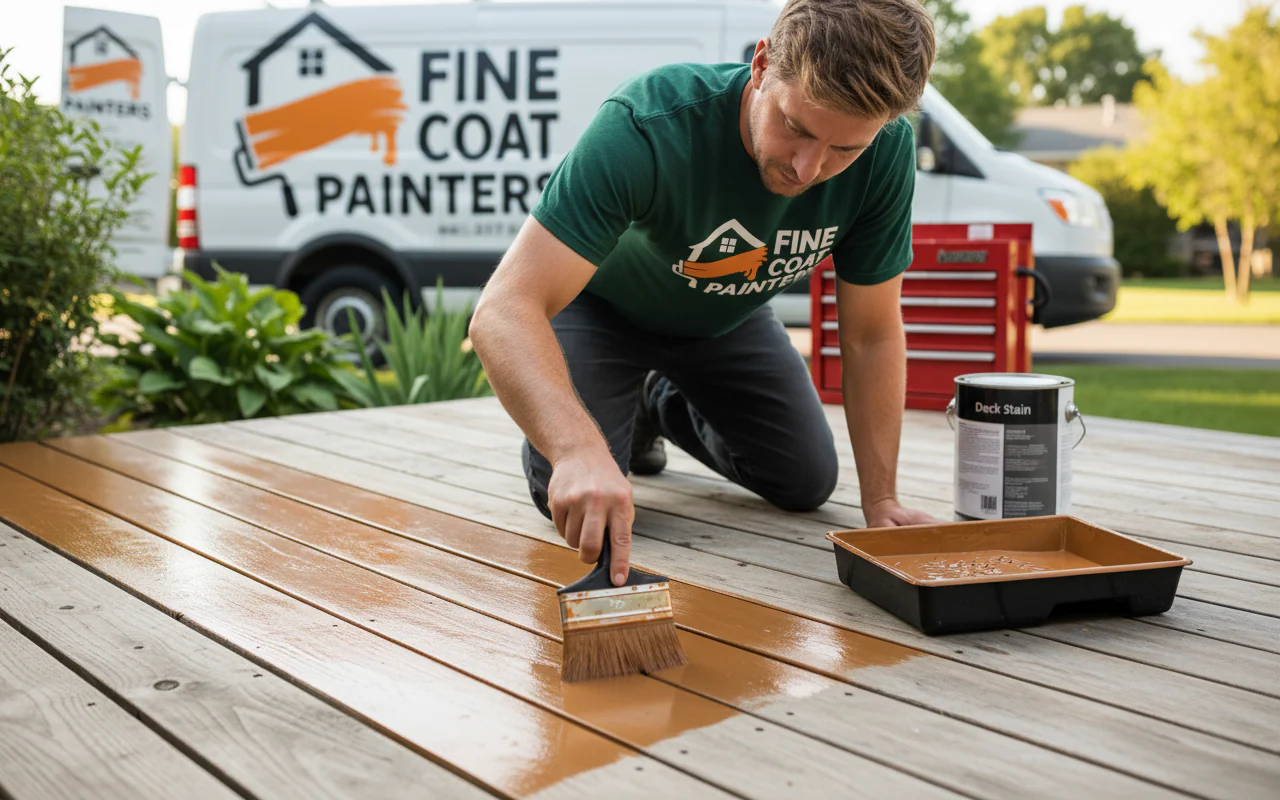
New England paints must be formulated to handle freeze-thaw cycles, humidity, and UV exposure—conditions that don’t exist in milder climates where many deck products are tested. When water penetrates your deck coating and freezes, it expands with enough force to crack even thick paint films.
For unpredictable climates with temperature fluctuations, 100% acrylic deck paint works best because these paints are elastic enough to move with the deck’s contracting and expanding without cracking or peeling. Standard latex paints simply can’t handle the stress.
The problem compounds with multiple freeze-thaw cycles each winter. What starts as microscopic cracks becomes visible peeling by spring, leaving your wood exposed to moisture damage. Puddled water and moisture are the #1 enemy of decks, making it crucial to cover all bare spots before winter when snow and water tend to puddle.
This is why preparation matters as much as product selection. Proper prep work including power washing, scraping, sanding, priming bare wood, and caulking gaps makes paint jobs last 8-12 years instead of 3-4. Skip the prep, and even premium products fail prematurely.
Coastal Humidity and Mold Resistance Requirements
Lynn’s coastal location creates humidity levels that promote mold and mildew growth on deck surfaces. In humid climates, choose stains with additional mold and mildew protection to combat constant moisture. This isn’t just about appearance—mold actually breaks down wood fibers over time.
Marine-grade coatings like Rust-Oleum Marine Coatings Topside Paint were originally designed for boats, making them excellent choices for decks exposed to lots of rain or extremely humid weather conditions. These formulations include fungicides and moisture barriers that standard deck stains lack.
The humidity challenge extends beyond just mold growth. Moisture affects how stains cure and adhere to wood surfaces. Even slight moisture will repel staining products and inhibit proper absorption into wood, which is why you should avoid working in rainy or humid conditions. This means timing your project correctly and choosing products that can handle our climate’s moisture levels.
Water-based stains often perform better in humid conditions because they don’t trap moisture like some oil-based products can. Stains allow wood to breathe and resist moisture naturally, while paint can trap moisture if applied incorrectly. For Lynn’s coastal environment, breathability becomes crucial for long-term performance.
Want live answers?
Connect with a Fine Coat Painters expert for fast, friendly support.
Best Stain Types for Massachusetts Decks
Semi-solid and solid stains last longest at four to five years, while transparent stains need recoating every one to two years. For New England’s harsh conditions, this longevity difference matters significantly for both cost and maintenance scheduling.
Solid stains offer the best UV protection and longest durability of all stain options, with thicker consistency that fills small cracks in wood while improving appearance and lifespan. However, they completely hide wood grain, looking more like paint than traditional stain.
Semi-Transparent vs Solid Stain Performance
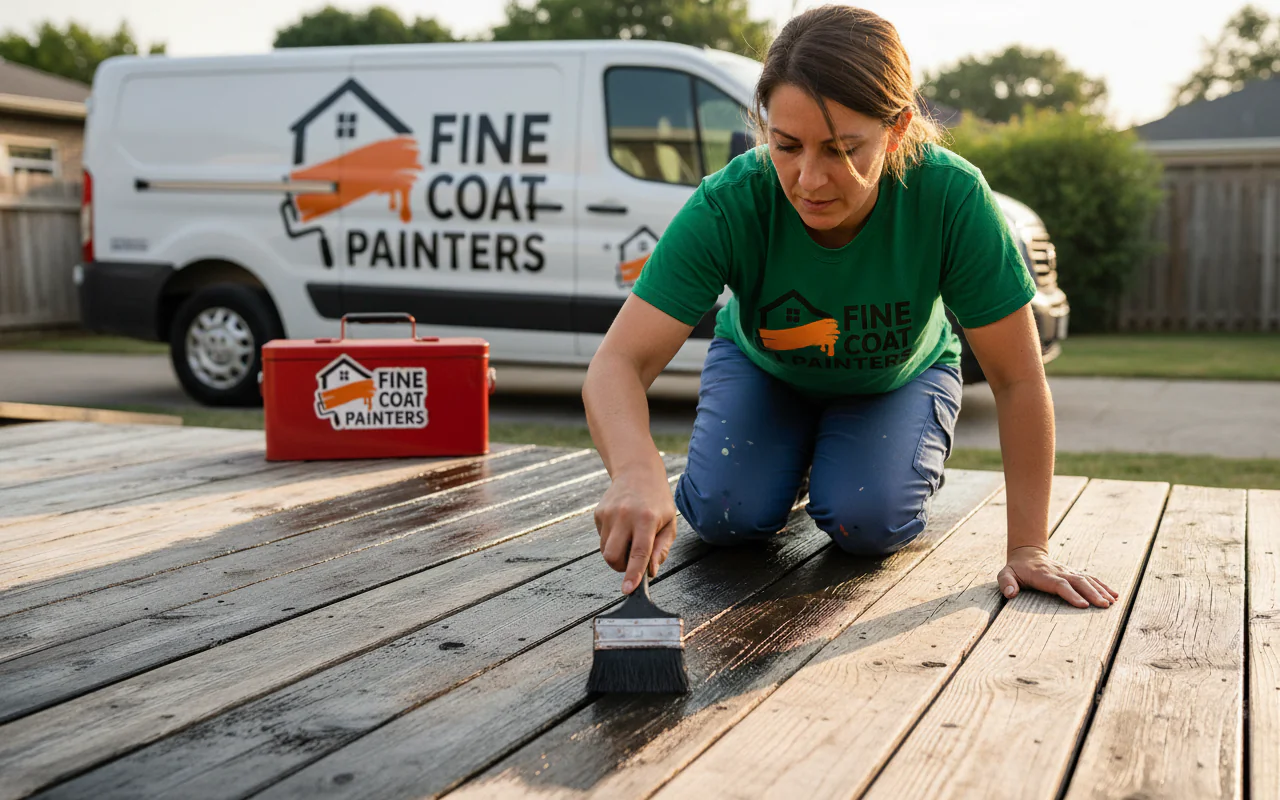
Semi-transparent stains last three to four years before needing recoating, offering a middle ground between protection and natural wood appearance. They allow some grain to show through while providing better weather resistance than clear products.
Semi-transparent stains color the wood but let grain peek through, making them good choices for wood you want to show off, though they aren’t as tough as solid stains and typically last only two to three years on decks. This shorter lifespan means more frequent maintenance but preserves your deck’s natural character.
The choice often comes down to priorities. If you love your deck’s wood grain and don’t mind more frequent maintenance, semi-transparent works well. If your deck’s in good shape, staining can enhance natural beauty while allowing wood to breathe, but if it’s weathered or damaged, paint might offer better protection and longevity.
For Lynn’s climate specifically, stain may perform better on older decks while paint suits newer, well-prepped surfaces. The key is matching product type to your deck’s current condition and your maintenance preferences.
Oil-Based vs Water-Based Formulations for New England
Oil-based stains penetrate and condition wood, usually requiring one coat but being less durable than water-based stains, while water-based stains aren’t as penetrative and require multiple coats for adequate coverage. This difference matters significantly for New England applications.
Oil-based deck stains are optimal for UV-intensive environments as they’re generally UV-resistant and penetrate deeper than water-based stains, with heat and dryness making them easier to apply since they naturally take longer to dry. However, Massachusetts humidity can complicate oil-based application timing.
Many 2025 popular colors come in low-VOC, water-based options that offer great durability without harsh chemicals, addressing environmental concerns while maintaining performance. Water-based formulations also handle humidity better and clean up easier.
The penetration difference affects long-term performance. Oil-based products soak deeper into wood fibers, potentially lasting longer, but they’re harder to recoat when the time comes. It’s challenging to switch from heavily pigmented stains to lighter ones, and if your deck has been previously stained with solid stain, it would be arduous to strip that off to go back to semi-transparent.
Choosing the Right Protection for Your Lynn, MA Deck
The best deck coating for your Lynn home depends on your deck’s current condition, your maintenance preferences, and your budget for both initial application and ongoing care. Homeowners can anticipate paying between $3 to $6 per square foot for professional staining, with total costs ranging from $3,000 to $8,000 for comprehensive projects.
Staining protects wood from mold, insect damage, and environmental deterioration while preserving structural integrity, enhancing natural beauty, and reducing future repair costs. The investment pays off through extended deck life and maintained home value. When you’re ready to protect your deck properly, we at Fine Coat Painters understand exactly what New England weather demands and how to deliver lasting results.